Dealing With Injuries

September 23rd, 2011 No comments

Dealing with injuries are an integral part of anyone's life who trains regularly

Dealing With Injuries- A Personal Story

I remember it like it was yesterday and very often it doesn’t seem as far away as 8 years ago. I was doing cable curls in the dingy basement gym that I trained out for years in Brooklyn with the full stack of 250lbs. Every sinew of muscle in my arms was focused on getting that weight up as the burn in my biceps became more and more unbearable. I was on my eight repetition, watching the weight go up ever so slowly and struggling against gravity and steel which in the moment were my mortal enemies when it happened. The cable station I was working in had a chin up bar placed squarely in the center and there was a relatively experienced member of the gym doing pull ups right behind me as I was doing my curls. The gym wasn’t big by any stretch of the imagination and so I had been used to people working right next to me as I trained. He wasn’t a novice by any means and so I didn’t pay any mind to the fact that he was only a few inches away from me at the time.


Looking back I ask myself over and over if I should have sensed something but I can honestly say that I didn’t and what happened would have happened the same way if I could relive the experience all over again. While doing his pull ups behind me, the unthinkable happened. His hand slipped from the bar and he fell off to his left side, all two hundred and fifty pounds of him coming crashing down on my neck just as I was in mid lift of two hundred and fifty pounds on the cable curl machine. I heard a snap as his elbow stuck me right at the base of my neck and I felt a white pain stab me all the way down to my fingertips. Perhaps I didn’t fully grasp the enormity of what had happened or perhaps I was in shock, either way I gritted my teeth and did two more pain racked repetitions before putting the weight down and stopping to access the damage.


The pain of a cervical injury is indescribable but I never lost hope that I would learn to work around it.

I remember the gentleman who fell on me saying something in the way of an apology, but I couldn’t really hear him. I was too busy realizing that I couldn’t really move my arms and that I was locked in position. He took one look into my eyes and ran out of the gym, never to be seen back there again. I think he believed- quite I error- that I was going to inflict some damage on him, something that I didn’t and never have considered. It was an accident and accidents happen. The severity of the outcome doesn’t necessitate that someone always has be blamed. Everyone kept asking if I was alright and I mumbled that I would be fine, all the while feeling a growing sense of dread that this wasn’t in the category of a minor injury that I could shrug off. I was hurt and hurt pretty seriously.


I made my way out of the gym and took a car service home- with every bump in the road and sharp turn sending bolts of agony through my neck and down my arms. I remember getting immediately into bed and nothing else. The next morning I awoke with my arms locked in position and a searing pain that I would become intimately acquainted with for the next 8 years. I never had any reason to see him as I never really got injured as an adult while training, but I had a chiropractor in my phonebook who I sent all my clients and martial art students to whenever they were injured. He specialized in sports medicine- and had a strong background in acupuncture as well and I truly respected him as a practioner.  I called him up and he said that he would see me immediately and so I endured the short but excruciating cab ride to his office- with even the vibrations from the door slamming seeming to send shivers of pain into my neck.


He worked on me for a while- an agony that I can hardly recall, and then placed some needles strategically in my back and neck to help relax the muscles.  He said it didn’t look good and referred me to a orthopedist to see what was going on. From that night onwards and for many nights to come I couldn’t sleep very well. You don’t think of your neck very much but when it’s injured you suddenly become aware of how involved it is in almost every move you make. It hurt to keep my head up, it hurt to put my head down, it hurt to sit and it hurt to stand. Worse of all, lying down was agonizing, both with and without a pillow. Sleep consisted of periods where the pain lulled just enough for me to drift off before rearing it’s head again and waking me up with shafts of pain if I moved ever so slightly in any direction. Night and day became one long stretch of misery, punctuated only by light and darkness. My whole life became about finding a position where my neck didn’t hurt too much.


I saw the orthopedist only two or three days later and he ordered an MRI. I have no qualms about being enclosed, nor am I claustrophobic- but the act of laying flat on my back in the machine required every iota of willpower to not scream. The technicians were initially somewhat annoyed by my difficultly in being completely immobile but after they saw the results they became a bit more sympathetic. They wouldn’t disclose the results but one of them touched me on the shoulder and said that she understood why it was so hard for me to lay still. The results from the orthopedist weren’t encouraging. I had two discs in my cervical vertebrae that were bulging out. One was protruding to the left, the other to the right. He said that short of a car accident such neck trauma wasn’t common, and that it may very well have been that my well muscled shoulders were the reason I wasn’t paralyzed from the blow.


It got worse- he said that there really was little that could be done and that the pain in my neck and in my hands would probably never really go away. A spinal injury, he explained, was permanent and there weren’t any options on the table. His advice was that I stop weight training altogether and do some rehabilitation exercises to help me with the injury. I got a second opinion which was pretty much the same and I decided to very respectfully disregard their advice. I didn’t take any of the painkillers prescribed, as I am not a fan of them and in my work in social services have seen many a case of people addicted to those same drugs after months of relying on them to get through the day. I wasn’t going to be one of them- not at all out of any misguided machismo, but out of a very real awareness that if I started something that made the pain go away, I would never stop taking it.


The muscles relaxants they gave me made me feel worse for wear and so I stopped taking those, using only Neurotin- a drug that stopped the shooting pains in my fingers and hands. Two weeks after the injury and wracked with pain, I dragged myself back into the gym. If it was that I could never hold a weight in my arms ever again, I had to see this for myself and if there was a way for me to get back, I was going to find it, no matter how long it took or how much suffering it involved. My neck hurt, but I could do a leg workout as long as I didn’t turn my neck or place any weight on my shoulders, and for the next several weeks, that’s what I did. As time went on I added light, supported movements for my abs, arms and upper back- with each new exercise bringing a fresh layer of pain the next day- but I would not stop.


I filmed my workout DVD in the best shape of my life after my injury.

I had worked with dozens of clients with severe herniations, and my philosophy had always been that if we can’t fix the joint, we can build the muscles around it up to a point where they can compensate and allow for pain free range of movement. A good physician heals himself and that’s what I set out to do. I had been hurt in the summer of 2003, but by the end of winter I was back. Careful- still in constant pain- but able to do most of what I used to do before. I wouldn’t dare try to deadlift 600lbs or clean and jerk 315lbs the way I did in the past- but there was a range of movements I could do and lifting heavy was never a requirement for me- it was just what I was able to do. By the fall of 2004 I had competed in two bodybuilding contests, winning one and making the top three in the other. I did them just to see if I still had it and some said that it was the best I ever looked.


I never said anything about being in pain, nor did I ever give any outward show of it-to admit it was to be defeated by it and I had no intention of being the subject of anyone’s pity. I learned to sleep as best I could without moving and when the weather changed I learned to deal with the pain that came with an approaching rain. That year I filmed my bodybuilding documentary and in doing so, lifted more weight than I had ever thought off in my life. I never let my injuries limit me mentally or physically, and I found that since I was so attuned to how I had to train, that I become far stronger and better for it. My experience as a trainer has always been founded on my injuries and I have had many of them- torn rotator cuffs, herniated discs in my lumbar region and tendinitis in just about every joint in my body. Those injuries defined me- as they very often taught me what not to do- hard lessons that I learned at a younger age when lifting as heavy as I could took precedence over common sense.


As painful as they were they also taught me compassion and understanding. My injuries helped me understand on a very intimate level what those of my clients who come to me with a pre-existing injury are going through. I have learned not only what not to do and how to work around just about any joint or muscle condition- but also how to put myself in their shoes and help them along in the healing process. An expensive education- being injured, but one that I cannot say that I regret in terms of how it helps me do what I do to help others recover from their injuries.


My neck hurts. And probably always will. I have my good days and my bad days, but you would be hard pressed to tell by looking at me. I have learned that there are things in life that you cannot change- but what you can change is your perspective. Thanks to my training, I wasn’t paralyzed by the injury and thanks to my training I can do almost everything that I could do before and more. The few exercises that I lost are made up for in spades by the fact that I am stronger and even more advanced in my own personal physical and spiritual development as a result. Pain is a part of life- one that we can’t ever completely eliminate, no matter how hard we try. But we can learn from it and we can make ourselves more for experiencing it. Every moment can be an opportunity for learning and advancement, but only if we are open enough to embrace the inevitable and do our best to learn from it. Thanks for reading.


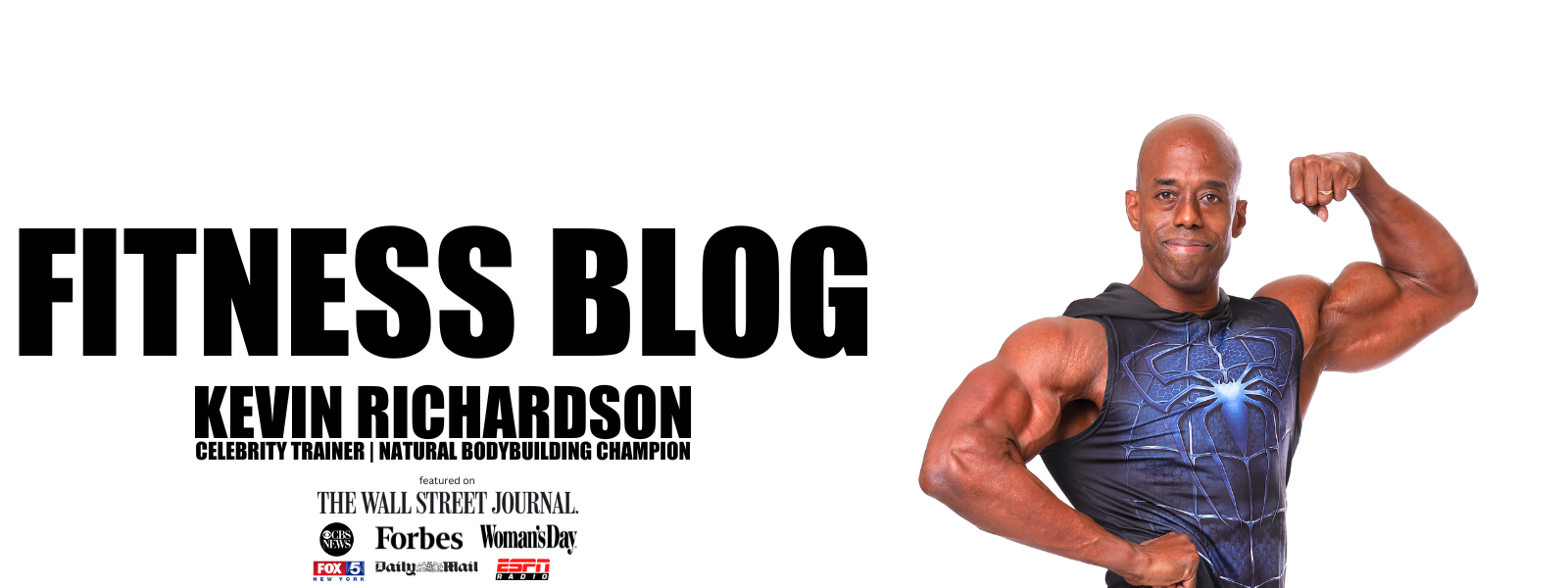
Kevin Richardson is an award winning fitness writer, one of the most sought after personal trainers in New York City and the creator of Naturally Intense High Intensity TrainingTM. Get a copy of his free weight loss ebook here. If you live in the New York metropolitan area and need help losing weight or taking your body to the next level give Kevin and his team a call at 1-800-798-8420 or click here to get started with 50% off your trial personal training session.

Email Newsletter icon, E-mail Newsletter icon, Email List icon, E-mail List iconSign up for our Email Newsletter


For Email Marketing you can trust


How Much Do You Know About Health & Fitness? Take Our Quiz And Find Out!

September 15th, 2011 No comments

How much do you know about health and fitness?

Take our quiz based on our blog articles, daily Twitter & Facebook health tips and see where you stand. Good luck!

How Did You Do?
90 to 100%- You are a tried and true expert in all things related to health and fitness.
70 to 89%- You know your stuff, but could do with a little brushing up on your diet and exercise knowledge.
50% to 69%- You passed, but just barely. Lot’s of catching up to do.
49% or less- You didn’t pass, but don’t despair, keep reading our blogs and articles and be sure to follow Kevin on Twitter for daily fitness updates and you’ll be up to scratch in no time!


The answers:

1. Someone who is overweight has a slower metabolism than someone with a healthy body weight.

False- The heavier you are the faster your metabolism will be- read more here


2. An apple really has 70,000 calories.

True. Strictly speaking an apple has 70,000 calories- since the energy content of food is measured in kilocalories which is one thousand calories. Confused? Read my article on understanding calories here.


3. If you follow a proper diet you can lose 10 lbs of fat in 1 week.

False- it’s mathematically  impossible if you are eating any food at all to lose that much fat in a week given the fact that you need to expend 36000 kcals for every 1 pound of fat. Read more here.


4. As little as 40 kilocalories over your daily energy requirements can lead to a weight gain of over 40 lbs in ten years.

Sad but true. A small intake over what your body really needs creates the silent, cumulative weight gain that seems to sneak up on you over the years – read more here.


5. Regular Snapple juices have less sugar than Coca Cola

False. Regular Snapple drinks have more sugar than an equal amount of Coca Cola even though it is marketed as a healthier alternative to sodas. Check out Kevin’s Twitter and Facebook updates for daily health tips!


6. When eating at a restaurant anything labeled ‘Crispy’ is fine to eat as a healthier choice.

False. The word ‘crispy’ is code for fried. Read more in our guide to healthy restaurant eating here.


7. Oats contain gluten.

False, pure oats do not contain gluten proteins. Read more on oats and gluten here.


8. Cane sugar is healthier than corn syrup.

False, several notable health organizations have affirmed that there is no distinction that should be made between the two in terms of health risk when consumption is immoderate. Read more here.


9. Weight training can’t protect you from bone loss over time.

False. It does and you can read more about the mechanisms of increasing bone density through resistance exercise here.


10. Feeling guilty after eating junk food can help you not eat it again.

False. The more you think about a food you ate the more likely you are to continue eating it. Read more about how guilt can sabotage your diet here.


11. Multi-vitamins have been conclusively proven to make you healthier.

False. Every study on the matter has found no health benefit to those without significant vitamin deficiencies (which contrary to popular belief if almost non-existent in developed countries). Read more about it here.


12. Soil today has 50% less of the nutrients it had 50 years ago and so do the fruits and vegetables grown in them.

False. While there is some reduction in soil nutrients over time, the amounts found in produce isn’t significantly lower, nor does it justify the use of vitamin supplementation. Read more here.


13. When you buy fruits and vegetables the growers get get as much as 50-60% of the profits.

False. Farmers get as little as 4% of the profit at times for produce- a figure that is far higher for those who raise animal stocks. That’s one of the reasons fruits and vegetables aren’t promoted as much as meat and high profit junk foods- the profit margins are simply too low. Read more about the economics behind the food that you eat here.


14. It is the interest of the US economy for you to eat more of the foods that aren’t good for you.

True. The food industry not only generates over 8% of the U.S. GDP with a trillion dollars in annual sales, but it also employs 12% of working Americans. Given these figures it isn’t surprising that government programs are in place to support their marketing  strategies to get you to eat more. Read more here.


15. Eating foods with added Omega 3 fats can improve your health.

False. Studies have shown this to not all be the case. Read more on how adding omega 3 fats to products do little to help anything but profit margins here.


16. Fasting is a great way to detoxify your body.

False and the only way to give your body a break from foods you believe to be toxic is to not eat those foods in the first place. Read more here on fasting and what it can and cannot do.


17. Aerobic exercise is essential for building endurance, losing body fat and working your heart.

False. It’s not the only way as studies have shown that you can increase endurance, lose body fat and get a significant improvement in cardiovascular efficiency from high intensity resistance training alone. Read how you can get fit in less time here.


18. Early man did not eat bread during the Paleolithic era and thus it is not a natural part of our diet.

False. Recent archeological digs in Italy, Russia and the Czech Republic have revealed the use of flat breads dating back as far as 30,000 years ago into what is commonly called the Paleolithic era. Read more about bread and its role in weight gain here.


19. Protein shakes are just as good as solid foods for your protein needs.

False. Contrary to marketing that masquerades as science, protein shakes are not only unnatural and highly processed products, but they can actually make you gain body fat. Read more here.


20. Tongol tuna is a better choice because it has lower mercury levels than regular tuna.

True. It’s a smaller fish and thus is lower in methyl-mercury. Read more about tongol tuna here.


21. The longer and more often you train the bigger and stronger your muscles will become.

False. Without continued overload to the point that stimulates an adaptive response, after becoming accustomed to the stimulus your muscles will have no reason to get bigger or stronger. It’s not always how much you do, it’s how you do it. Read more about how muscles get bigger and stronger here.


22. Eating for  your blood type is a proven way to ensure that you eat what is best for your body.

False. There is no science behind the idea that blood type has anything to do with food intake. Read more about the misinformation behind blood type diet theory here.


23. A drink or two a week won’t make a difference in your weight loss efforts.

False. Alcohol goes a long way in stopping your efforts to lose body fat. Read more about drinking and weight loss here.


24. Carbohydrates can make some people gain weight faster than anything else.

False. Any food, be it a protein, carbohydrate or fat consumed in quantities exceeding the caloric requirements of your body will make you gain weight. Fats, with a caloric value of 9 kcals per gram are actually more likely to make you gain weight as they have more calories than carbohydrates which have 7 calories per gram, but all things being equal eating anything more than you should will make you gain weight. Regardless of genetics. Read more about calories here and read more about the lack of evidence supporting a genetic link to modern obesity here.


25. The simplest way to eat well is to eat foods in as natural a form as possible with some degree of moderation.

True. The more unnatural a product is, the more likely it may not be the best decision for you to eat it. Read more by following updates on my Twitter account here.


Thanks for taking the test!


Kevin Richardson is an award winning fitness writer, one of the most sought after personal trainers in New York City and the creator of Naturally Intense High Intensity TrainingTM. Get a copy of his free weight loss ebook here. If you live in the New York metropolitan area and need help losing weight or toning up and taking your body to the next level with a time saving and practical system of diet and exercise, give Kevin and his team a call at 1-800-798-8420 or click here to get started with 50% off your trial personal training session.

Email Newsletter icon, E-mail Newsletter icon, Email List icon, E-mail List iconSign up for our Email Newsletter


For Email Marketing you can trust


No Pain No Gain- Understanding Muscle Soreness

September 8th, 2011 No comments

Understanding delayed onset muscle soreness

No Pain No Gain- Understanding Muscle Soreness


We all know the mantra when it comes to weight training or just about any type of intensive exercise- ‘No pain no gain’, and as anyone starting a training program can attest- the first few days after your initial workout can be painful indeed. We call it muscle soreness, or just plain pain, but the techincal term used is Delayed Onset Muscle Soreness (DOMS). Call it what you like but it can Unlike the pain you feel as a result of an acute or overuse type injury, Delayed Onset Muscle Soreness isn’t always a bad thing. On the contrary, in many ways it is a natural part of the adaptation response- the very process that our body uses to make our muscles bigger and stronger. That being said, there is some credibility to the ‘No Pain No Gain’ credo.


As much as pain may be a part of an intense exercise program you have to be aware of the differences between DOMS and an injury or chronic syndrome like as arthritis. The differences are usually quite marked, however after your first bout of exercise after a period of relative inactivity DOMS can feel quite crippling indeed! Given the high intensity protocols that are the hallmarks of my own training style, I can honestly say that there is almost never a day when I don’t have a muscle group that isn’t sore. So much so that some mornings I wake up hoping that someone got the license plate numbers of the truck that ran over me! You might think that twenty plus years of high intensity training would confer some immunity to muscle soreness, but I can tell you honestly that this isn’t the case (my legs hurt right now as I type this article!) Given my years of being so intimately acquainted with this type of pain, you might call me a wee bit of an expert, and in this article we will explore the mechanisms behind muscle soreness as well as dispel some of the myths.


Delayed Onset Muscle Soreness- The Mechanisms

DOMSYou can think of your muscles performing three different types of contractions- concentric contractions, eccentric contractions and isometric contractions.  Concentric contractions occur when you do an exercise like a biceps curl and bring a weighted barbell up to your face. By flexing your elbow to raise the weight up towards your shoulder you contract your biceps muscles and make the muscle  fibers in your upper arm physically shorter- that’s a concentric (or shortening) contraction. However, when you lower the weight from your face back to the resting position you are performing an eccentric contraction. Eccentric contractions are characterized by a lengthening of your muscle fibers and play a significant role in muscle soreness as you will see as we go along. An isometric contraction is one where you simply hold an object in a fixed position- and so using our model of a biceps curl- holding the weight up halfway without moving it would be a classic example of an isometric contraction (isometric, by the way means no change in length.)


Now there are some points that must be kept in mind when our muscles perform a eccentric or lengthening contraction. Firstly, absolute tensions achieved are very high relative to the muscle’s titanic tension generating ability. In plain English this means that you can lower a weight that is much heavier than what you can lift. Anyone who has ever done weight training with a partner or trainer may have experienced this firsthand as there comes a point where you can no longer lift a weight, but if someone helps you get the weight up, you can still lower it under control. The second factor is that skeletal muscle tissue is resistant to lengthening by its very nature. So unaccustomed exercise of repeated or forced eccentric (lengthening) contractions will induce muscle damage. Damage that we experience as delayed onset muscle soreness. [1,2,3]


An example that most can relate to is the soreness you experience after a day of hiking in mountainous terrain. You may notice days afterwards that your leg muscles and calves are sore and this can happen regardless of whether or not you have strong legs and are in good shape. The soreness isn’t an indication that your leg muscles are weak, it’s just a result of the extensive lengthening actions these muscles have to perform while descending and at unaccustomed angles. Funny enough going up a mountain, or climbing flights of stairs won’t do much to make you sore the next day, it’s the descent that gets you. When I was younger and morbidly fascinated with the idea of sprinting up the staircases of tall buildings (we didn’t have much in the way of skyscrapers where I came from) I found that I didn’t feel sore the next day even running up 20 flights of stairs three or four times. I would always take the elevator down and catch my breath but one day it was out of service and I had to walk down the stairs each time. I was quite surprised to find that I was almost handicapped with pain for the next few days- the reason being the extensive amount of muscle lengthening movements involved in walking down the stairs.


The Myth of Delayed Onset Muscle Soreness & Lactic Acid Buildup

Lactic acid isn't reponsible for delayed onset muscle soreness or the burn you feel while exercisingNow running up those stairs, my legs muscles would feel a serious burn! The same burning sensation occurs during all of my high intensity workouts, but contrary to popular belief, this pain has very little to do with lactic acid. In fact lactic acid doesn’t really play a part in delayed onset muscle soreness. Researchers once believed that lactic acid buildup was indeed the cause of the burning sensation you feel in your muscles during any intense exercise and it was further thought that lactic acid was responsible for DOMS.  However this has been proven to not be the case at all. Lactic acid as it turns out is actually a metabolic by product of our muscular contractions and it breaks down very quickly into a useable fuel source for your muscles. Consequently, there is little accumulation in your muscle cells that could explain the burning sensation or the delayed onset soreness felt afterwards.


Before you get mad at researchers for not getting it right the first time, you have to understand that knowing precisely what goes on inside our bodies during an activity is a very difficult task. Much of what we know of the human body and how it works is akin to having an object inside of a box and trying to figure out what’s happening on inside without being able to open it. We can perform tests that allow us to make educated guesses as to what is going on, but we can’t open the box to be 100% sure. The same applies to our bodies, as short of surgically cutting into our muscles and observing what’s going on during exercise we have to rely on tests that give us indications of what happens after the activity is performed- not during. Modern ultrasound tests and magnetic resonance imaging can give us some clues as to what’s going on inside our bodies during exercise, but as advanced as it may be imaging technology it still doesn’t always conclusively answer all of our questions. That being said, research is always ongoing and every day it seems like we learn something new. The current theory for the burn you feel in your muscles while training is that it is caused by calcium or other substrates in our muscle cells but again, it is still an educated guess at this point.


Delayed Onset Muscle Soreness & Pain

Pain is a difficult thing to measure as our perception of pain is influenced by so many factors including age, gender as well as social and cultural norms about acceptable behavior while experiencing physical discomfort.[4] That being said, two different people can experience the same magnitude of tissue damage due to intensive exercise, but experience radically different magnitudes of perceived pain as pain is such a completely subjective phenomenon.[3] There is the aspect of adaptation as well as someone experienced in high intensity weight training won’t react to delayed onset muscle soreness the way someone experiencing DOMS for the first time after their first couple of workouts. You do tend to get used to it over time, and some people absolutely love the feeling of something aching all the time (I think of it as a dress rehearsal for when I am in my nineties!) while others learn to simply ignore it. My personal observations over the years having trained hundreds of clients is that men tend to be more debilitated by DOMS than women. The pain usually starts within 24 hours of the activity and can become worse the second day and at times it can linger for as long as a week depending on the degree of muscle damage and how accustomed you might be- (or not) to the exercise performed. Either way it isn’t ever permanent and unlike an acute or chronic injury, more exercise can actually make it feel better.


Delayed Onset Muscle Soreness  & The Adaptive Response

Muscle soreness and the adaptive responseOne great part of delayed onset muscle soreness is that it can in some cases be a step in the process of making your muscles bigger and subsequently stronger. In the event of an overload, the microtrauma experienced by your muscles will lead to an adaptive response by your body to make the muscle fibers of the area you worked bigger and stronger so they won’t suffer as much damage the next time you perform the same exercise. (See my article on how Muscles Get Bigger & Stronger for a detailed look at the adaptive response). That being said, we don’t know why the pain caused by delayed onset muscle soreness isn’t instant, nor do we know whether or not the muscle damage theory is the sole cause. Other theories suggest that the pain may be caused by changes in connective tissue as a result of activity and that there is a significant inflammatory response- which could explain why the pain isn’t instantaneous.[5,6] Given that the inflammation response may play a significant role in activating the adaptive response to make your muscles stronger, the practice of taking over the counter anti-inflammatory drugs as a way of relieving the pain may not be a great idea as it might make you get less out of your workouts. Instead the common treatment would be to ice or cool down the muscles exercised immediately after training, followed by warm baths or showers a day or more after your exercise session. Back home the practice was to train and then go take a bath in the sea right afterwards and it did indeed work wonders in reducing the amount of pain you would feel the next day. Massage therapy can also go a long way in helping you deal with the pain associated with delayed onset muscle soreness as well if you can get it.

How sore you are after a workout isn’t necessarily an indicator of how hard you trained and should not be used as such. Some people have naturally high pain thresholds and don’t seem to ever suffer much from delayed onset muscle soreness, and since it can vary so much from person to person it is a pretty weak barometer of how much work you did. Your level of soreness can also be affected by how well rested you are after the workout and your nutritional intake. Either way it’s a huge mistake to use soreness exclusively as a gauge of how effective your workout was since there are so many variables involved. Some days you’ll feel crippled after a relatively moderate workout, while other times a training hard session you won’t hurt that much at all afterwards. What’s important is to know when the pain isn’t just soreness and always consult your physician if you suspect the pain you are feeling might be injury related.

References

1.Fridén et al. Segmental muscle fiber lesions after repetitive eccentric contractions Cell Tissue Res 1988

2 Evans et al. 1985; Fridén and Lieber, 1992

3 K. Noska. Muscle Soreness & Damage & The Repeated Bout Effect- Skeletal Muscle Damage & Repair

4. Strong J, Unruh AM, Wright A and Baxter. Pain A Textbook for Therapists

5. Cheung et al. Delayed Onset Muscle Soreness, Treatment Strategies and Performance Factors. Sports Med 2003;

6. Smith 1991


Kevin Richardson is an award winning fitness writer, one of the most sought after personal trainers in New York City and the creator of Naturally Intense High Intensity TrainingTM. Get a copy of his free weight loss ebook here. If you live in the New York metropolitan area and need help losing weight or getting into spectacular shape, give Kevin and his team a call at 1-800-798-8420.


Email Newsletter icon, E-mail Newsletter icon, Email List icon, E-mail List iconSign up for our Email Newsletter


For Email Marketing you can trust


Understanding Calories & How They Relate to Weight Loss

August 25th, 2011 No comments

Understanding Calories & How They Relate to Weight Loss

Understanding Calories & How They Relate to Weight Loss


The word ‘calorie’ is a ubiquitous part of our dietary vocabulary. You can’t see calories, touch them or sense them but you can see all too well the effects of eating too many of them when your waistline begins to expand. If you don’t get enough of them you can see the effects as well as your bodyweight begins to decrease. As omnipresent as calories are in the lives of those determined to lose weight, they are yet the least understood aspect of nutrition for most dieters, which is ironic given the fact that an understanding of calories and their role is crucial to anyone serious about losing weight. The confusion over calories comes mostly thanks to the bombardment of contradictory information from food manufacturers, the weight loss industry and  the media- which uses dietary information as a form of entertainment and not as a tool for educating the public. Both food manufacturers and the weight loss industry have a vested interest in telling us a lot about nothing- which leaves most people bewildered by what to do next in terms of their weight loss and open to believe just about anything and most importantly- buy more of their products. In today’s world an educated consumer wouldn’t be much of a consumer since an understanding of the science behind calories would make them unlikely candidates for popular diet/exercise trends, nor would they fall for the many calorie related strategies used by food manufacturers to get you to buy more of their products for the wrong reasons. (Read my article on the economics of obesity for more information on how marketing confuses consumers.) Calories aren’t rocket science, but they are a bit complicated. Nevertheless, if you take the time to understand this fundamental element of nutrition, it will help you go a long way in achieving your weight loss goals.


A Calorie Isn’t A Calorie- Understanding The Nomenclature

One of the most bewildering problems is the word itself as the word calorie as it appears on food labels isn’t exactly the correct term, even though it’s widely used. There is a saying that you can’t understand the nature of anything unless you call it by its proper name and I think this precept is applicable in this case as well. A calorie isn’t the correct label for the energy in our foods. A calorie (written with a lower case ‘c’) is a measurement of heat energy used in thermodynamics and is never used in regards to food energy measurement. The energy in our foods is measured in kilocalories,(k/cal), which means 1,000 calories with the word ‘Calorie’ (with a capital ‘C’) used by those in the dietary fields to refer to kilocalories. Are you confused yet? A medium sized apple therefore isn’t really 80 calories in the strictest sense, it’s 80 kilocalories or 80,000 calories! It makes sense to keep the numbers manageable by expressing all values in units of a thousand and I am more than certain that food manufacturers would be horrified to see their products labeled with three extra zeros added to the calorie count. Other countries avoid the whole conundrum by using the metric measurement of kilojoules, which is 4.18 kilocalories. From here on in for the sake of simplicity I will use the correct nomenclature- Calorie or kilocalorie when referring to units of food energy measurement so we are all on the same boat.


What Is A Calorie/Kilocalorie?

Tape Measure next to Nutrition Facts for caloriesA kilocalorie is the amount of energy required to increase the temperature of one liter of water by one degree Centigrade from 14.5 degrees to 15.5 degrees Centigrade. A wonderful definition, but one that means little to anyone without a background in chemistry or an understanding of the metric system. To translate for those who didn’t grow up with meters and grams, a Calorie/kilocalorie is the amount of heat needed to raise a quart of water (which is just about a liter) by 33.8 degrees Fahrenheit – which is 1 degree Centigrade.  Water boils at 212 degrees Fahrenheit (100 degrees Centigrade) so that medium sized apple we were talking about earlier has just enough energy to boil a quart of water. Let’s put this into perspective-Given that the average American adult male consumes a total of 2437 calories daily[1], that would be enough energy to boil a little over 6 gallons of water! The amount of energy is astounding, but it you must note that energy from foods is released very slowly through the processes of digestion and metabolism. If not we would have some serious problems to contend with and spontaneous combustion would be a fairly regular event! Where does all this energy go? Mostly towards the biological work required for our bodily functions- everything from breathing to using our muscles and repairing our cells. In essence this energy is used to maintain balance (homeostasis- a bigger word with the same meaning) with the heat energy released from these functions serving to maintain our body temperature. (See my article on metabolism here).


Measuring Calories/Kilocalories

The calorie count of foods like potato chips are deceptive given the unrealistic serving sizesSo how do we measure Calories/Kilocalories? The process actually isn’t that complicated as the food is burned to ash and the heat released is measured in a device called a bomb calorimeter. Since the Third Law Of Thermodynamics states that energy can be neither created or destroyed, we know that the amount of energy released from a food inside our body through digestion and oxidation would be about the same as the amount of energy released if it was completely burned in a closed system. A bomb calorimeter does just that and researchers make allowances for the components of food that would not be completely digested in your body. Some plant based fibers, for example cannot be completely digested and thus can’t be converted into energy. A a result any calories from indigestible food components are subtracted from the total amount of heat energy measured. Also subtracted are the nitrogen components of protein based foods which are also excreted by our bodies without being used. By taking these factors in to consideration researchers are able to arrive at a final figure that best represents what our body would actually gain from a food. Without these corrections you would find many low calorie foods like vegetables being listed as high calorie foods with a much higher Calorie/kilocalorie count than they really do. Thanks to the requirements of the provisions of the Nutrition Labeling and Education Act enacted in 1990, all foods in the U.S. have to have their nutritional information listed prominently on the container in which they are sold. These labels are often misleading in terms of their caloric counts as while the kilocalorie values are accurate, the serving sizes are kept ridiculously low so that the calorie count won’t appear to be too high. Take the label on a small bag of a brand of  ‘natural’ potato chips for example with it’s serving size of 1 ounce which has a value of 150 kcal. Now 150 kilocalories may not sound like much, but that’s only one seventh of the total bag, and I can’t tell you the last time I saw anyone eat one seventh of a small bag of potato chips and walk away as most people would eat the whole bag. Thus the real energy yield is more like 1050 kcal which is almost half the average number of kilocalories needed by a woman to maintain her bodyweight and is a glaring example of a seriously high kilocalorie food masquerading as a harmless low calorie treat thanks to serving size manipulation.


The Caloric Components Of Carbohydrates, Proteins and Fats

The Calorie/Kilocalorie Components Of Carbohydrates, Proteins and FatsNow the energy content of the food we eat come from three macronutrients- carbohydrates, protein and fats. Protein and carbohydrates for the most part have a total of 4 kilocalories per gram, (a gram is about one third of an ounce by the way), whereas fats have 9 kilocalories per gram. Consequently, foods that are high in fat are usually high in kilocalories. Olive oil is has many heart healthy benefits, but it is still very much a high calorie food. As little as two tablespoons have 28 grams of fat, which adds up to 248 kcal. Putting that into perspective- two tablespoons of olive oil are calorically equal to three medium sized apples, which is one reason why it’s so important to be aware of the fat content of your foods as the numbers add up pretty easily quickly. The mathematically savvy amongst you may have discerned that while olive oil has a total of 28 grams of fat- it has 248 kilocalories and not 252 kilocalories. If 1 gram of fat yields 9 kilocalories then it should have 252 kilocalories- (9X28=252) but it doesn’t. The reason for the discrepancy is that oils (and most foods) contain some amount of water which is calorically inert.

Why do carbohydrates and proteins have only 4 kilocalories per gram, whereas fats have 9 kilocalories per gram? The answer isn’t that hard to fathom if you  keep in mind the basic elements and molecular make up of these nutrients. Protein is made of amino acids while carbohydrates is made up primarily of glucose. Fats are composed of fatty acids which are the most complex in terms of their biochemical structure and have the greatest number of chemical bonds holding it together. If you conceptualize the idea of energy being released when a food is broken down, it makes sense that fatty acids- which have far more bonds holding it together than glucose or amino acids would thus store more potential energy and be as a result much higher in kilocalories.


Calories/Kilocalories And Body Fat

You can't expect ot lose 10 lbs in a week no matter how you cut your caloriesOne of the most important themes from the laws of thermodynamics is the idea that if we consume more Calories than we need our bodies will have no choice but to store them as body fat. This will happen regardless of how healthy the food source may have been. You can get fat from eating high protein foods, fats or carbohydrates- even if it is labeled fat free, organic or heart healthy. It makes no difference whatsoever the type of food you eat, if you ingest more than you should, you’ll gain weight. But as we said before, it is easier to go overboard calorie-wise  from eating foods that are high in fat since they are so much more calorically dense. I should mention as well that at 7  kcal per gram, alcohol has more calories than protein and carbohydrates and the added curse of being processed in such a way that if you consume too much of it can significantly increase fat stores around your liver and other organs. (See my article on alcohol and weight loss as well as my post on visceral abdominal fat).


Weight Loss And Calories/Kilocalories- Why You Can’t Lose 10 lbs of Fat In A Week

One of the best aspects of understanding what calories are is that it gives you an informed perspective as to how ludicrous rapid weight loss plans can be. The Holy Grail of losing 10 pounds of fat in a week is highly improbable, given the concrete mathematics involved and even doing so in two weeks isn’t within the realm of rational expectations. Consider that a pound of fat contains a total of 3,500 kilocalories- and that the average male needs anywhere in the ballpark of  2000 to 3000 calories to maintain his bodyweight, (this figure is slightly lower for females).  Thus to lose ten pounds of fat in a seven days you would need to eat 35,000 kilocalories less or burn off that many kilocalories through exercise. Even if you did both such a result is unlikely. With the figures in front of you it is clear to see that no diet can bring about a ten pound fat loss in a week.  You would have to eat nothing at all and  still increase your activity level to make it possible, and between us I don’t know anyone who can exercise effectively while starving. Weight loss is thus a gradual occurrence and a matter keeping your caloric intake within an acceptable level while increasing your body’s need for more energy. You can do this by exercising and increasing your muscle mass- since muscle requires additional calories to be maintained. None of this happens overnight so always be wary of anyone or anything saying otherwise, especially if it comes with a lightening of your wallet.


Calories Matter But What You Eat Matters As Well

You might think that since weight gain depends on calories from any source that you can eat pretty much anything as long as your intake remains within the boundaries of what you need to maintain an energy balance. This is the premise behind many diet fads and food manufacturers love it as it advocates that you can eat what you want- junk food included. As attractive as this may sound to the consumer  however the logic behind it is severely flawed. Firstly, the energy balance principles derived from the laws of thermodynamics don’t account for the fact that we are human beings and that many other factors come into play where weight gain is concerned. If you follow the idea of weight gain being a matter solely based on energy balance then their should come a time when weight gain stops as the increased mass and consequent increase in metabolism compensates for the extra calories being consumed.[2] The larger you get the more calories you burn and yet in the real world this almost never happens as people continue to gain weight throughout the course of their lives.[3] Our behavior and eating patterns play a major part in weight gain and food manufacturers are quite aware of this. If you only ate junk food in amounts meeting your body’s energy requirements it might work, but those foods are engineered by folks who spend a lot of time, money and effort studying and mastering the creation of foods that are designed to make you eat more. Studies have found that ingredients in many processed foods such as high fructose corn syrup make us eat and drink far more than we should and thus contributing to the continued weight gain.[3]  Combine that with the liquid calories in sodas and juices and you have a situation where it is very difficult for moderation to occur. Furthermore, by continued consumption of junk foods you simply can’t learn the healthy eating habits. Nor can you learn how to select natural foods which are much easier to eat in moderation than than their distant processed cousins. Long term weight loss comes from a change in lifestyle and thus anything that keeps you away from doing so makes it far less likely that you’ll be successful in your long term weight loss endeavors. (See my article on Controlling Your Eating Habits.)


So what about the stories of those who lost significant amounts of weight in a short time from low carbohydrate diets?  Again an understanding of the science behind how our body works gives us some insight. Carbohydrates are stored in our body as glycogen, which is a combination of glucose and water. When you reduce your carbohydrate intake your glycogen levels will drop and you will lose some of that water in the process. That’s the weight you’ll see lost on the scale but it is all water weight, and does nothing to reduce your fat stores. An effect that is at best temporary and a distraction from the practice of watching your portions and eating in a consistently better fashion with a diet that includes all food groups in sensible quantities. There aren’t any shortcuts and faced with the abundance of so many energy dense foods and our inability to accurately estimate how many calories we consume[4] it is a difficult task indeed. A slight excess in caloric intake can go a long way as eating only 40 calories more than our energy requirements can add an extra 40lbs of fat over the course of ten years. Taking that into consideration and the fact that our ancestors never had anywhere near the food supply we have today, it becomes a bit easier to understand our current obesity crisis. It might be an uphill battle, but it’s one that can be won with a consistent approach that emphasizes lifestyle change and not immediate weight loss results.


References

1. National Health & Nutrition Examination Survey- Intake of Calories and Selected Nutrients for the United States Population, 1999-2000

2. Kushner, Robert (2007). Treatment of the Obese Patient (Contemporary Endocrinology). Totowa, NJ: Humana Press. pp. 158. ISBN 1-59745-400-1. Retrieved April 5, 2009.

3. Wells JC, Siervo M. Obesity and energy balance: is the tail wagging the dog? Eur J Clin Nutr. 2011

4. Peter G. Kopelman, Ian D. Caterson, Michael J. Stock, William H. Dietz (2005). Clinical obesity in adults and children: In Adults and Children. Blackwell Publishing


Kevin Richardson is an award winning fitness writer, one of the most sought after personal trainers in New York City and the creator of Naturally Intense High Intensity TrainingTM. Get a copy of his free weight loss ebook here. If you live in the New York metropolitan area and need help losing weight or taking your body to the next level give Kevin and his team a call at 1-800-798-8420 or click here to get started with 50% off your trial personal training session.


Email Newsletter icon, E-mail Newsletter icon, Email List icon, E-mail List iconSign up for our Email Newsletter


For Email Marketing you can trust


The Slow Metabolism Myth- Understanding The Role Of Metabolism In Weight Gain

August 11th, 2011 No comments

The slow metabolism myth in weight gain and weight loss

The Slow Metabolism Myth- Understanding The Role Of Metabolism in Weight Gain


It is a disarmingly simple concept- some people are cursed with a naturally slow metabolism and gain weight in spite of how carefully they watch what they eat. On the other side of the spectrum, a fortunate few are blessed with fast metabolisms which allow them to eat any and everything without gaining weight. As a central aspect of the idea of genetic predispositions towards weight gain and obesity, the slow metabolism hypothesis has long been hailed as a common explanation as to why some individuals appear to gain weight no matter what they do. As popular an argument as this may be there is ample evidence to the contrary  (read my article on genetics and weight gain) and the rationale of genetically predetermined disorders can’t account for the prevalence of obesity throughout Westernized populations. Such notions nevertheless do increase the sales of many fitness related products while adding to the cacophony of misinformation regarding the role of our metabolism in losing and gaining weight. Unfortunately, an individual lacking in-depth knowledge of nutrition and physiology can’t necessarily see any distinctions between rational deductions from observable evidence and baseless speculation. Most of what passes for fitness related information today is either a form of entertainment or ideologically driven pseudoscience, propagated by those who stand to profit the most. The complex nature of how our body works is often dumbed down to simple concepts that people feel they can relate to easily. The idea of slow metabolisms being a widespread problem for millions of people and the cause of your own seemingly inexplicable weight gain is one that is delightful empowering as it lays the ‘blame’ for your extra pounds on your somewhat underperforming metabolism. This argument makes you feel better about yourself and more inclined to purchase products that purport to help you lose weight by speeding up your metabolism in one way or the other but this is hardly the case. The reality is that weight gain isn’t mysterious and slow metabolisms are hardly to blame.


What Does Metabolism Really Mean?

Slow metabolism vs fast metabolism isn't relevant to weight loss or weight gainMetabolism is defined as the total sum of all the chemical reactions taking place in your body. Our metabolic processes fall into two categories, they are either anabolic- which refers to the action of building up, or catabolic- which refers to the mechanism of breaking down. A classic example of an anabolic process in our metabolism is muscle building, where as a response to the stress of exercise our body increases the amount of skeletal proteins. An increase that we externally observe as our muscles getting bigger and stronger (see my article on how muscles get bigger and stronger for a more detailed description). Catabolic metabolic processes are the exact opposite and a common example would be the breaking down of our foods to provide energy for the cells in our body and thus keep us alive. When we are healthy these processes occur in a state of equilibrium, a balance that is referred to as homeostasis.


There is one other important but somewhat complex concept to contend with in understanding metabolism and that is the first law of thermodynamics. The first law of thermodynamics states that energy cannot be created or destroyed and so conceptually in a fixed physiological system such as a living organism, total energy coming in must be the same as the total energy out, unless some of it is lost or stored. Energy coming into our body refers to the calories we obtain from food and drink. Energy going out refers not only to energy used in physical activity but also for the work performed by the cells in our body. Work in this context also applies to the biological work of repairing cells, and our body’s struggle to maintain homeostasis such as the constant regulation of body temperature. Even reading this article requires some element of biological work as your muscles contract to keep your eyes focused on the screen.


How We Measure Metabolism

The primary way that our body produces energy is through the combustion of carbohydrates and fats in the presence of oxygen. This function is called aerobic metabolism, and it leaves behind measurable byproducts in the form of carbon dioxide and water. That being the case we can roughly  estimate an individuals’ metabolism by measuring the amount of oxygen consumed and the volume of carbon dioxide produced. The process to measure metabolism is called indirect calorimetry. Calorimetry means the measuring of heat energy given out or taken in and the term ‘indirect’ is used since we can’t exactly measure the amount of carbon dioxide coming out of each cell in your body at any given time. We can however get an overall view of what’s going on by observing the exchange of carbon dioxide and oxygen from your lungs.


A device called a metabolic cart is used to measure these gases and it requires you to wear a mask very similar to what a scuba diver would wear, except it doesn’t provide air but rather records air coming from your lungs. From indirect calorimetry we can calculate your basal metabolic rate- which is the minimum metabolic rate your body requires to maintain your body weight and functions.[1] Many factors can affect your basal metabolic rate such as genetics, age, gender, hormones and most importantly for our purposes- diet and activity level. When the amount of food energy (calories) ingested is more than what your body uses then  there is a concurrent gain in body mass.[2] This gain in body mass is our body’s way of storing energy for a time when it isn’t readily available and the way it does so is in the form of fat tissue. Our ability to store considerable reserves of energy in the form of fat is one of the hold offs from our past, serving to help our ancestors of survive countless famines and the scarcity of food that has defined human life for the past several thousand years.


The Slow Metabolism Myth

Getting back to the idea of a slow metabolism, average metabolic rates for men are estimated to be about 1.0 kilocalories per hour per kilogram of bodyweight. Women usually have slightly slower metabolisms than men (and we will explain why) and their metabolic rates are usually about 0.9 kilocalories per hour per kilogram of bodyweight. It seems natural to think that someone who is overweight and has difficulty losing weight might have a slower pthan normal metabolism but contrary to popular opinion, someone who is obese would have a GREATER energy expenditure than someone who is thin.(3) The mechanics of it makes total sense as it takes more energy to maintain a larger body mass.[3] The bigger the organism the more energy is needed for homeostasis as someone weighing over 400lbs has far more biological and mechanical work to do than someone weighing 150lbs. So why do some people struggle with weight gain while others don’t? It must be emphasized that the causes of obesity are complex however differences in rates of metabolism are not valid explanations as to why it happens.


One key issue is our inherent difficulty in estimating exactly how much food we consume  during the course of a day- a challenge that studies have shown can be even harder for those who are overweight.[4] As much as we may think we know how much we eat on a regular basis, indirect calorimeter testing has shown time and time again that even the most conscientious among us tend consistently under-report our food intake. Compounding this issue is the unfortunate reality that it doesn’t take much for our body to gain weight. Our bodies have no way of knowing that food is available to many of us in developed countries to the point where we throw away billions of pounds of it every year. All our bodies know is that storing excess energy is critical for our survival as it is nevertheless designed to endure continued periods of low food supply. That being said we are all very much efficient at gaining weight and keeping it on and we do so with an ease that is hard for most to fathom. To put the average human’s weight gaining ability in perspective, a weight gain of 44 pounds over the course of ten years would only require you to eat 30-40 kilocalories more than your body needed everyday.[5] That’s all it would take. Not a ton of junk food nor hefty servings of high calorie food and drink. Just half of an apple, a plum, a cup of asparagus, 1/7 of a cup of rice, 1/3 of an ounce of cheese, or 2 fluid ounces of soda over your daily energy expenditure requirements would add over forty pounds in a decade if there was no change in energy requirements. A sobering thought, but one of the many reasons so many people gain weight. It really doesn’t take much at all for it to happen.


Slow Metabolism Versus Fast Metabolism Explored


Fast vs slow metabolism exploredA study presented at the 2008 annual Endocrine Society Conference in San Francisco further highlights the problems with the slow metabolism concept as it was demonstrated that obese people process food at exactly the same rates way thin people do when they are in a rigidly controlled environment. In a study conducted at the University of Colorado Health Sciences Center in Denver, 26 naturally thin individuals with Body Mass Index (BMI) counts between 19 and 23 who considered themselves to have a fast metabolism were compared in a carefully monitored environment to 23 individuals with BMI’s of 23-27 who identified themselves and family members as ‘obesity prone’ to see if they could overeat and not gain weight since they appeared to have a naturally higher metabolic rate than those who had problems with weight gain.

In both groups metabolic rates were tested after the subjects ate a normal diet and again after three days of eating 40% more food than their individual energy requirements. All subjects underwent two one-week dietary study periods, with four days of a control diet followed by three days of either eating exactly the amount of calories for their calculated energy expenditure or overeating. Metabolic rates were tested using the indirect calorimetry method and all foods were carefully prepared and monitored following a standard of 20% protein, 30% fat and 50% carbohydrates. At the end of the study researchers found that both groups had higher metabolic rates at rest after overeating for three days compared to when they ate a normal diet but the increase was the same for both groups. Researchers had theorized that energy expenditure and fat oxidation would increase following overfeeding in the ‘fast metabolism’ group, which would explain the process protecting them from gaining weight, but this turned out not to be the case at all.


Difficulties in Estimating Food Intake As A Weight Gain Factor

The slow metabolism myth and weight lossThese findings were consistent with what many other studies have found  time and time again, which is that some people have a hard time balancing their daily caloric intake with how it relates to their actual energy needs. Thin people don’t have faster metabolisms that somehow save and protect them from weight gain, and those with problems losing weight don’t have slow metabolisms. Over the past twenty years of my career as a personal trainer I have had very similar experiences. I started out being convinced that there were people who suffered from slower metabolisms and that they would gain weight easily while others (myself included) found it ridiculously hard to gain weight. As time went on my observations and personal experiences proved both concepts to be flawed as everyone who trained consistently and ate in accordance to their individually designed dietary plans were able to get into fantastic shape as long as they stuck to the program. It didn’t matter if they were overweight all their lives or if they were previously unable to lose weight, the only differences were that those who had more weight to lose took longer to get to a point where they had a high degree of definition as compared to those who started at a lower body fat percentage to begin with. On the other hand- everyone who had trouble gaining weight because they thought they had a ‘fast metabolism’ was able to gain significant amounts of muscle mass as long as they adhered to the diet prescribed for them and a training program designed to stimulate muscle growth.

I always believed that I had a fast metabolism as I was painfully thin for the earlier part of my life. I started weight training at 125 lbs at six feet even, but my metabolism had nothing to do with my ability to gain weight. As long as I ate in accordance with  the dietary plan designed to help me get bigger I gained weight. It took a lot longer for me to do so to the point where it would show but I was able to put on over a hundred pounds of lean muscle mass over the course of 17 years or so without the use of any drugs whatsoever. As for the protective aspect of a ‘fast metabolism’, in the days when I ate junk- I got fat like everyone else. Today I stay steady at 225lbs at about 6% body fat not because of a fast metabolism but because I am always on point with what I eat and my program of high intensity training. When I didn’t eat as well as I do now I tipped the scale at an ungodly 252 lbs looking nothing like how I do today. If I ‘relax’ my eating there isn’t a magic parachute waiting to protect me from getting fatter if I overeat and indulge in the wrong foods and the same applies to everyone else.


Beyond The Energy Balance Theories- How What You Eat Plays A Part In What You Weigh

As straightforward as this may sound it isn’t the end of the story, as weight gain is even more complex than simply saying that eating too many calories will make you gain weight. The laws of thermodynamics and the theory of energy expenditure versus energy requirements don’t completely explain why people keep gaining weight as the years go by. Given the energy balance principles there should be a finite point where weight gain reaches a plateau as energy demand rises with increases in body mass but this doesn’t happen at all as many continue to gain weight throughout the course of their lives.[7] Alternate and perhaps more accurate models take a look at the role of modern food ingredients as a reason some people keep accumulating those extra pounds. Fructose derived sweeteners (sucrose and high fructose corn syrup) can trigger increased fat tissue accumulation in addition to increasing appetite- a vicious cycle which usually leads to a decrease in activity.[7] This model for why we gain weight places emphasis more on what you eat in addition to how much you eat as the two seem to be very closely related.

In the end it is hard not to make simple cause and effect judgments. The slow/fast metabolism neatly explains everything and in many cases places an uncontrollable factor into the equation. One that can be easily blamed for the extra pounds around your waist, but this simply isn’t the case for the vast majority of individuals. Hormonal disorders and some medications seem to have a part in weight gain as well but in most instances it really comes down to an awareness of what you eat, how much of it you eat and how active you are to deal with the calories you are taking in.

Related Articles:

Why We Regain Weight- The Leptin Connection

Food And Self Control- How Do You Stop Cravings?

Obesity And Chronic Disease- Is It Genes Or Lifestyle?


References:

1. Kaiyala KJ, Ramsay DS: Direct animal calorimetry, the underused gold standard for quantifying the fire of life. Comp Biochem Physiol A Mol Integr Physiol. 25 April 2010

2. Canadian clinical practice guidelines on the management and prevention of obesity in adults and children

3. Kushner, Robert (2007). Treatment of the Obese Patient (Contemporary Endocrinology). Totowa, NJ: Humana Press. pp. 158. ISBN 1-59745-400-1. Retrieved April 5, 2009.

4. Peter G. Kopelman, Ian D. Caterson, Michael J. Stock, William H. Dietz (2005). Clinical obesity in adults and children: In Adults and Children. Blackwell Publishing

5. Björntorp P. Obesity. Lancet 1997; 350: 423–6

6. Carlsson B, Lindell K, Gabrielsson B, et al. Obese (ob) gene defects are rare in human obesity. Obes Res 1997; 5: 30–5

7. Wells JC, Siervo M. Obesity and energy balance: is the tail wagging the dog? Eur J Clin Nutr. 2011


Kevin Richardson is an award winning health and fitness writer, one of the most sought after personal trainers in New York City and creator of Naturally Intense High Intensity Training™. Get a copy of his free weight loss ebook here. If you live in the New York metropolitan area and need help losing weight or taking your body to the next level give Kevin and his team a call at 1-800-798-8420 or click here to get started with 50% off your trial personal training session.


Email Newsletter icon, E-mail Newsletter icon, Email List icon, E-mail List iconSign up for our Email Newsletter


For Email Marketing you can trust